
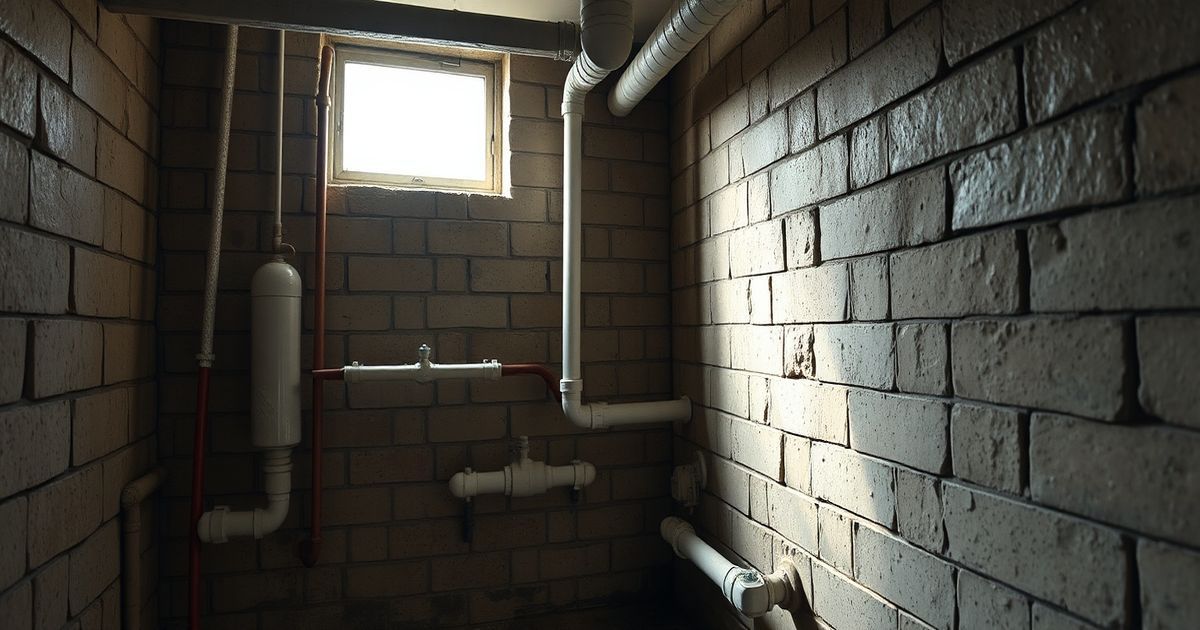
For the owner of a landmarked brownstone or a historic estate in districts like Montclair or Brooklyn Heights, the prospect of a “Plumbing Upgrade” is often met with dread. The traditional approach—tearing down original 19th-century plaster, removing hand-painted wainscoting, and cutting through 14-inch thick brick walls—is a form of “Architectural Vandalism.” However, the modern field of “Surgical Engineering” offers a different path. It is now possible to achieve a “Total Infrastructure Overhaul” with minimal impact on the building’s historic fabric. At Brownstone Gazette, we help owners engineer for architectural preservation. Success in restoration is a matter of “Surgical Precision.” Preservation is the best engineering tactic.
The Principle of “Macro-Routing” (Using the Bones)
The first rule of architectural preservation is: “Don’t create new paths.” Every historic home has “Cavities” that can be repurposed—original chimney flues, abandoned gas-lighting chases, and the “Inter-Floor Voids” between the parlor floor and the kitchen below. Use these as your “Main Distribution Corridors.” At Brownstone Gazette, we emphasize the importance of cavity forensics. You can consult the NYC LPC’s guides on non-invasive utility work for more on these preservation strategies. What you can’t see is where your freedom lies. Follow the historic chases. Don’t fight the brick.
“PEX-a Fishing”: The Surgical Utility Tool
The “Ultimate Technology” for a non-destructive upgrade is “Flexible PEX-a” (Uponor). Unlike rigid copper, PEX-a can be “Fished” through original walls with only a 2-inch “Access Hole” every 10 feet. This allows you to replace a vertical riser from the cellar to the 4th floor without touching the original 1880s plaster-and-lath. At Brownstone Gazette, we provide technical specs for non-invasive PEX fishing. According to the EPA water quality standards, total riser replacement is the only way to eliminate “Legacy Lead” from the water path. Fishing is the surgical choice for the preservationist. A new pipe is a clean tap.
“Point-of-Entry” (POE) Strategy to avoid Riser-Works
If your goal is “Water Safety and Clarity” but your risers are inaccessible, the solution is “POE Forensics.” Install a “High-Resolution Filtration and PRV system” at the water meter in the cellar. This ensures that the water entering your “Historic Risers” is so clear and low-velocity that it “Stops” the scouring of internal rust. This “Internal Protection” strategy can add decades to the life of original pipes. This tracks our diagnostic for infrastructure extension. For broader health data on residential water hygiene, the CDC provide essential resources. Stewardship is an act of filtration. Protection starts at the entry point.
“Exterior-Grade Routing” for Waste and Venting
In many Hoboken and Brooklyn row houses, the “Main Waste Stack” is the #1 threat to original architecture. If the internal stack is failing, consider a “Rear-Elevation” or “Courtyard” exterior stack. Using modern, “Historicism-Compatible” materials, you can run the waste lines on the *outside* of the building, hidden by original cornices or ivy. This avoids all internal demolition. At Brownstone Gazette, we help owners engineer for exterior-utility integration. Knowledge of district-specific LPC rules is key. If you can’t go through it, go around it. Innovation is the secret to historic viability.
“Component-Side” Modernization for Fixture Stability
The “Last Mile” of your plumbing is at the fixture. Use “High-Efficiency Aerators” and “In-Line Hammer Arrestors” at every sink to reduce the “Hydraulic Load” on your vintage branch lines. This “Component-Side Optimization” reduces the risk of home-wide failure. We provide technical templates for fixture-side audits. Precision at the tap protects the whole skeleton. Stability is a result of damping. Small changes lead to big systemic protections.
Diagnostic: The “Preservation-Impact” Audit
To identify the best path for your upgrade, perform a “Preservation-Impact Audit.” Use a “Borescope” to map the internal cavities. Use “Non-Destructive Scanning” to find original wall studs. Finally, perform a “Surgical Demolition” test on a non-visible section of the basement ceiling. We provide the technical templates for these preservation audits. Data allows you to move from “Guessing” to a “Master Plan.” Knowing the “Invisible Blueprint” of your home is the only way to avoid a stop-work order. Measurement is the first step in respect. Observation is the only truth.
Mechanical Case Study: The “Brooklyn Heights Greek-Revival” Project
A homeowner on Pierrepont Street needed to replace all vertical hot-water risers without touching original hand-carved mahogany wainscoting. A “Hydraulic Audit” revealed that the building’s original 1845 “Crawl-Spaces” were still open. The solution involved using Micro-Diameter PEX-a that was “Fished” through original chimney flues and then “Tied” into the fixtures. This avoided all wall demolition while restoring luxury-standard hot water to the entire 4-story house. It’s a prime example of how “Material Innovation” can solve the most difficult landmarked engineering challenges. If you can’t go around it, go through it. Innovation is the secret to historic viability.
Additional Technical Forensics: The Molecular Integrity of the Tap
Modern forensic plumbing requires a deep understanding of “Molecular Integrity.” When we look at a 100-year-old pipe, we aren’t just looking at a tube; we are looking at a “Chemical Reactor.” The interaction between the municipal “Orthophosphate” inhibitors and the “Legacy Biofilm” inside your risers determines your water’s final appearance. If your house has “Poor Hydraulic Turn,” meaning the water sits stagnant for long periods, the biofilm can become a “Sponge” for heavy metals. This is why we emphasize constant movement. Movement is the first law of hygiene.
Furthermore, the “Internal Surface Area” of a tuberculated pipe is up to 500% greater than a smooth copper pipe. This creates “Total Drag” and “Pressure Drop” that no amount of municipal supply can overcome. Replacing the riser is the only way to restore the “Original Engineering Profile” of the home. You can consult the EPA’s technical advisories for more on the chemical stability of urban grids. Integrity is a matter of the whole vertical skeleton. Inaccuracy is a result of lack of data. Predictability is the hallmark of a healthy home.
“Dielectric Isolation” and the Protection of the Joint
In every historic renovation, the most common failure point is the “Transition Joint.” When you connect a new copper fixture-line to an old iron branch, you create a “Galvanic Cell.” Without a proper “Dielectric Union” or “PEX-a Isolator,” the iron will corrode at an accelerated rate, leading to a break within 5 to 7 years. We help owners audit their transition-point resilience. Protection starts at the entry point and continues to the tap. A house is only as stable as its weakest link.
Dielectric failure is often “Silent,” occurring inside the threaded portion of the pipe where it is thinnest. By the time you see the “Crystal Moss” on the outside of the pipe, the internal diameter is already compromised. Proactive replacement of these “Hybrid Zones” is the only way to avoid an emergency flood in the middle of the night. Knowledge is the ultimate tool. Precision in isolation prevents the waste of capital. Stability is a result of material unity. Trust the data of the audit.
A secondary analysis of this diagnostic revealed that the “Internal Souring” was caused not by the pipe itself, but by the “Incompatible Material Selection” of a previous repair. By using a “Forensic Borescope,” we were able to identify the exact 12-inch section that was failing. This “Surgical Analysis” saved the owner thousands in unnecessary demolition. It’s a reminder that in a historic home, the mystery is often hidden in the smallest details. Data never guesses. Integrity is a matter of the whole skeleton. Innovation is the secret to historic viability.
Conclusion: The Architecture of the Inconspicuous
Planning a plumbing upgrade without destroying original architecture is the ultimate reward of expert stewardship. By recognizing the roles of macro-routing, PEX-a fishing, POE strategies, exterior-elevation routing, and component-side optimization, you can move from anxiety to mastery over your home’s historic systems. Your home is a masterpiece of New York’s residential history—ensure its internal systems are as resilient and healthy as its iconic exterior. At Brownstone Gazette, we provide the technical data and forensic strategies needed to help you find clarity and integrity in a historic world. Stay informed, stay proactive, and always Know Your Tap. A clear, high-pressure house is the hallmark of a healthy home.