
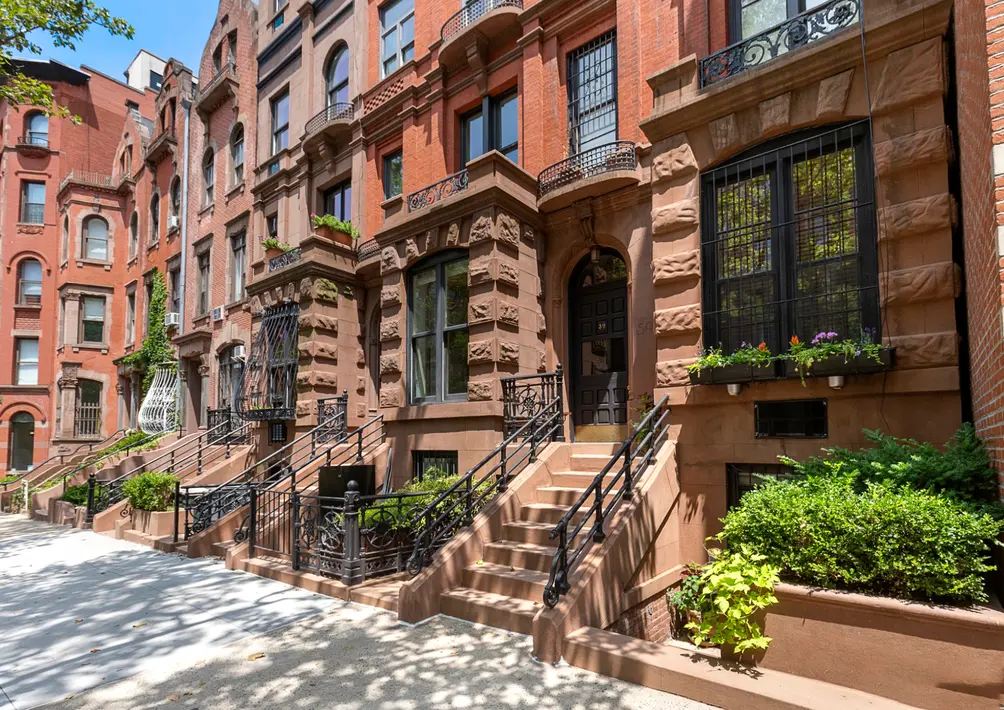
Brownstone neighborhoods didn’t become iconic overnight. Their evolution reflects the changing identity of New York City over more than 150 years. Most brownstones were built during the mid- to late-1800s, when developers envisioned whole districts of uniform row houses for the city’s growing middle and upper-middle class. Blocks in Brooklyn Heights, Park Slope, Fort Greene, Harlem, and the Upper West Side emerged as cohesive communities, built with repeating architectural patterns that gave the city a recognizable rhythm: stoops, bays, lintels, and matching cornices.
As the 20th century unfolded, many of these neighborhoods experienced cycles of decline and rediscovery. Economic shifts, demographic changes, and waves of immigration reshaped entire areas. Some brownstones were divided into rooming houses. Others fell into disrepair. But starting in the latter half of the century, the architectural value of these homes regained prominence. Preservation groups formed, landmark protections expanded, and homeowners began restoring brownstones to their original styles.
Today, brownstone neighborhoods remain desirable not just for their architecture, but for the lifestyle they enable. They offer something hard to find in a city defined by vertical living: tree-lined streets, human-scale blocks, deep neighborhood ties, and historic character that you can feel the moment you step outside the door. A brownstone block can feel like a small village within the city—kids on stoops, neighbors chatting on sidewalks, garden-level apartments spilling into backyards, and parlor-floor windows glowing at night.
They attract people who value a blend of history, community, and individuality—homes with recognizable charm but no two exactly alike. For many, the appeal is emotional as much as practical: living in a structure that has seen generations come and go, yet still stands strong. Brownstone neighborhoods preserve a continuity of New York life that high-rise corridors simply cannot replicate. That’s why their desirability endures—and why it has only grown stronger in recent decades.
Understanding a brownstone means understanding the original design logic behind its structure. These homes weren’t built randomly; every feature had a purpose, tied to 19th-century living patterns, heating systems, construction materials, and social norms.
The parlor floor—the second level, accessed by the stoop—was historically the formal entertaining space. High ceilings, large windows, ornate plasterwork, and grand moldings were intentional markers of status. Many brownstones still preserve these details, even after multiple renovations.
The stoop itself was a practical and cultural element. It lifted the main floor above the dust and debris of the street while giving the household a semi-public social space. Children played on stoops, neighbors gathered there, and families used the small set of steps as an extension of the home.
Inside, plaster walls, often adorned with medallions and decorative trim, were standard for higher-end homes. These features must be maintained differently than modern drywall, but when preserved, they tell a visual story of the building’s age and craftsmanship.
Fireplaces originally heated each major room, long before central heating. Many brownstones still have their original mantels, though chimneys may have been capped or repurposed. They remain an anchor feature of the interior design even in modern layouts.
The façade itself—brownstone vs. brick—varies by block and era. Brownstone, a type of sandstone, provided a warm, textured look but weathered quickly. Brick, used on less expensive models or later construction, proved more durable but offered different aesthetic appeal.
The charm of these features is that they weren’t designed to mimic anything else. They are original to the period—and living with them today is part of the brownstone experience. Preserving, restoring, or thoughtfully modernizing them is a central element of maintaining a true brownstone identity.
Living in a brownstone is fundamentally different from living in a high-rise, and not just because of the architecture. The lifestyle shifts in subtle, meaningful ways.
In a high-rise, life is vertical. You take elevators, pass through lobbies, and share infrastructure with dozens or even hundreds of neighbors. There is convenience, predictability, and a homogeneity to the experience. Systems are newer, walls are thinner but more standardized, and building management handles most maintenance issues.
Brownstone living is horizontal and personal. Instead of floors stacked on floors, you move through long, interconnected rooms, original staircases, and different levels of a single structure. You interact more with the block than with a building staff. Your neighbors aren’t separated by fifteen floors—they’re across the stoop, visible through bay windows and backyard fences.
Brownstones offer privacy and individuality, with layouts that often feel like a full home rather than a unit. But they also come with responsibility. Owners manage heating systems, roof repairs, plumbing quirks, and exterior upkeep. Even renters feel the character of the building in ways high-rise occupants rarely do: creaking floors, plaster imperfections, stair rails worn smooth over generations.
A brownstone is a living structure—one that shifts with seasons, absorbs sound differently, and reflects its age in every detail. This can be a joy for people who value authenticity and history. It can feel overwhelming for those accustomed to the modern uniformity of high-rise living.
But for many, that’s the appeal. Brownstone living connects residents to the history of the block, the craftsmanship of the builders, and the community outside the front door. It’s a lifestyle shaped by the home itself, not the amenities surrounding it.
First-time brownstone buyers often fall in love with the charm—and overlook the complexity. These homes reward commitment, but they also demand patience and a long-term view of maintenance.
Expect surprises. Even well-renovated brownstones can reveal unexpected issues once you move in: a valve that hasn’t been touched in decades, a structural beam that needs reinforcement, a garden-level moisture pattern that behaves differently in summer and winter. None of this is unusual; it’s a normal part of owning a historic structure.
You should also expect layered systems. Plumbing may be partially updated. Electrical lines might run through both modern and original conduits. Walls may conceal old brick, unused flues, or historic framing that behaves differently than modern materials. Learning how the house “breathes” and how water, heat, and humidity move through the structure is part of the onboarding process.
Buyers should budget for ongoing maintenance—not because brownstones are defective, but because they are old. Repointing, roof upkeep, boiler servicing, and waterproofing are routine, not optional. These homes last because previous owners maintained them. You will continue that lineage.
At the same time, expect deep satisfaction. Owning a brownstone feels different from owning a new home. You’re responsible for a piece of the city’s architectural history. You bring your own chapter to a building that has seen generations. The space will feel personal in ways new construction simply cannot replicate.
For first-time buyers, the key is mindset: don’t see maintenance as a burden—see it as stewardship. When cared for properly, brownstones remain stable, beautiful, and uniquely rewarding homes.