
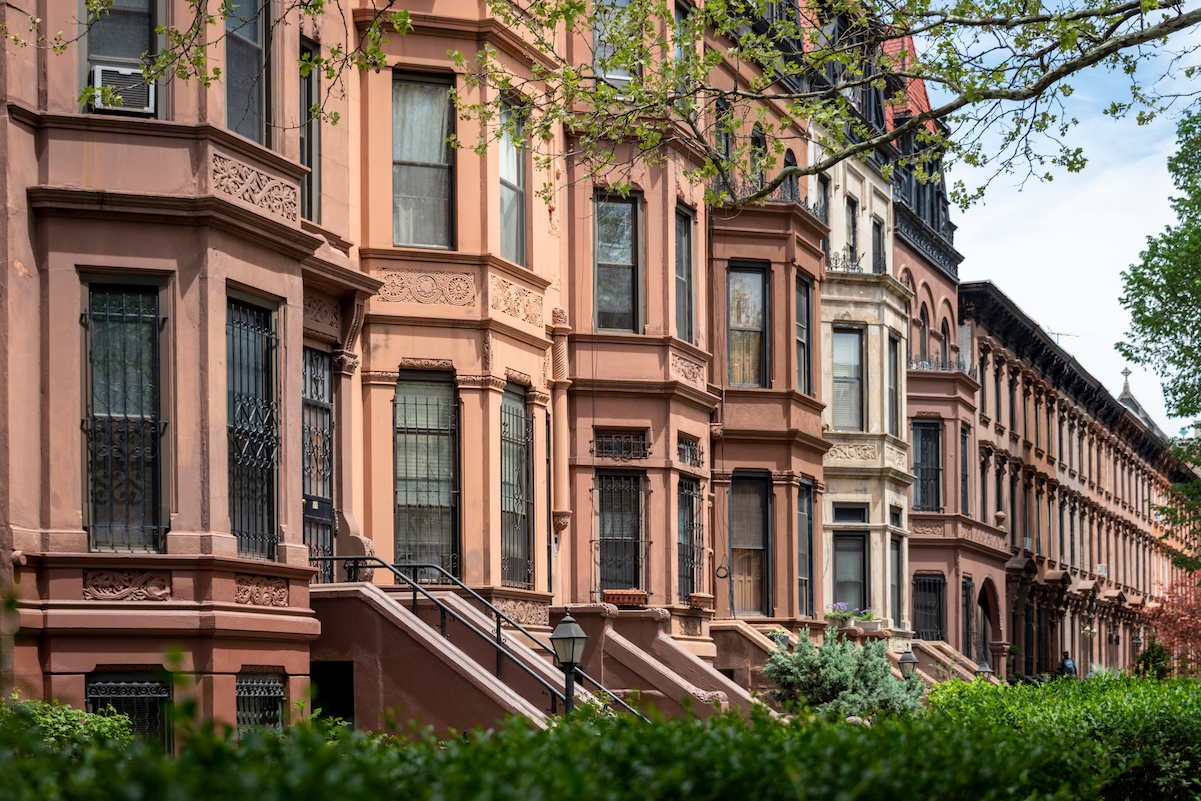
Renovating a brownstone isn’t like renovating a modern home. These buildings contain layers of history—original brickwork, load-bearing party walls, century-old joists, and evolving plumbing and electrical systems. Because of that, the most common renovation projects tend to focus on bringing older features up to modern living standards while respecting the home’s architectural identity.
Kitchen renovations are at the top of the list. Most brownstones were built long before open floor plans and modern appliances. Kitchens were smaller, often tucked at the back of the garden level. Today’s renovations often include expanding the space, reconfiguring gas and water lines, upgrading ventilation, and reinforcing floors to handle heavier appliances. Many homeowners choose to open up the rear wall to bring in more light while preserving—or recreating—historic details in adjacent rooms.
Bathroom renovations also rank high. Original bathrooms were small and not designed for today’s expectations of comfort. Modern updates involve rerouting plumbing through old joist cavities, reinforcing subfloors, managing moisture properly, and sometimes working around or replacing lead or galvanized pipes.
Extensions, especially rear extensions, are common in neighborhoods like Park Slope and Carroll Gardens. These projects enlarge living areas but require structural engineering, landmark approvals, and careful integration of old and new materials.
Basement dig-outs (lowering the cellar floor to create livable space) require even deeper structural thinking, including underpinning foundation walls and addressing long-standing moisture conditions.
Finally, roof updates are a regular part of brownstone care. Many brownstones still have old roof membranes, patched repairs, or aging parapets that need masonry work. A new roof often leads to additional improvements: insulation upgrades, skylights, and HVAC placement, all while respecting the building’s exterior profile.
Renovation in a brownstone is never “simple,” but with the right approach, it transforms a historic structure into a modern home without sacrificing its soul.
Restoration and remodeling are often used interchangeably, but in a brownstone, they mean very different things. Understanding the distinction is essential for planning a project that honors the building’s character while meeting modern needs.
Restoration focuses on bringing original features back to life. This includes repairing plaster moldings, restoring fireplaces, uncovering brick walls that were covered by drywall, refinishing original wood floors, and preserving existing staircases. Restoration aims to maintain authenticity—keeping as much original material as possible. It requires skilled craftspeople familiar with historic techniques, from lime plaster work to traditional carpentry.
Remodeling, on the other hand, focuses on transforming the layout or function of a space. Opening a parlor floor, creating a larger kitchen, reconfiguring bedrooms, or adding a bathroom all fall into remodeling. In a brownstone, remodeling must be approached carefully because the structure relies on interior walls and joists differently than modern buildings. Removing a parlor wall or shifting staircases requires engineering insight to avoid compromising structural stability.
Most brownstone renovations involve a blend of both. For example, a homeowner might remodel the kitchen layout but restore the original plaster archway leading into the room. They may install a modern HVAC system while restoring 19th-century window casings.
Restoration is about the building’s past; remodeling is about its future. The best projects respect both, creating a home that functions for contemporary life without erasing the craftsmanship that makes brownstones special. This balance is what separates thoughtful brownstone renovation from generic modernization.
One of the biggest challenges of brownstone renovation is updating essential systems—plumbing, electrical, and HVAC—without stripping away historic character. These systems were never designed for today’s efficiency, load, or safety standards, yet they must be integrated into a structure that wasn’t built for flexible routing.
Plumbing upgrades often involve replacing old galvanized or lead supply lines, rerouting drains that were originally stacked vertically, and navigating structural joists that might not align with modern bathroom layouts. Skilled plumbers working with historic homes know how to conceal supply lines through walls, floors, or custom-built chases without damaging decorative plaster or millwork.
Electrical modernization is equally important. Many brownstones still have a mix of updated circuits and legacy wiring hidden behind walls. Bringing the system up to code means installing grounded outlets, adding modern panels, and distributing circuits intelligently. Electricians must do this while preserving original crown moldings, medallions, or wainscoting.
HVAC upgrades pose unique challenges. Central air wasn’t envisioned when these homes were built, so retrofitting requires thoughtful duct placement or the use of ductless mini-split systems. Many owners choose high-velocity systems with small flexible ducts that can be routed discreetly through closets or soffits without damaging ceilings or parlor details.
The goal is to bring the home up to 21st-century comfort standards while keeping its 19th-century aesthetic intact. When done right, these upgrades make the house more efficient, safer, and more comfortable—without erasing what made the brownstone beautiful in the first place.
Neighborhoods like Park Slope, Carroll Gardens, Brooklyn Heights, and Fort Greene have some of the city’s oldest and most historically layered brownstones. Renovations in these areas often reveal “legacy issues”—conditions that have accumulated over decades or even a century of use.
One of the most common discoveries is old wiring hidden behind plaster. Knob-and-tube remnants, cloth-covered lines, or mixed-era splices often emerge when walls are opened. These systems may have been partially updated over time, creating an inconsistent electrical network that requires careful mapping and replacement.
Lead or galvanized plumbing is another frequent find. Even if a previous owner upgraded certain sections, vertical stacks or branch lines may still contain older materials. This affects water clarity, pressure, and overall reliability.
Many homes also suffer from iron pipe corrosion, especially in drain lines. Cast iron deteriorates slowly, forming channels or cracks that aren’t visible until demolition begins.
Brick deterioration is another legacy issue. Behind restored plaster, homeowners often discover spalling brick, mortar erosion, or patched-over structural repairs from decades ago. These conditions must be addressed to stabilize the home for the next generation.
Finally, many brownstones have previous DIY or low-budget renovations buried inside walls. These can include mismatched framing, improperly vented bathrooms, patched electrical systems, or unpermitted extensions. Renovation uncovers all of it—and resolving these issues is part of making a historic home truly sound.
In neighborhoods rich with old housing stock, surprises aren’t defects—they’re reality. Renovations in these areas are about uncovering truth, correcting past shortcuts, and preparing the home to last another century.